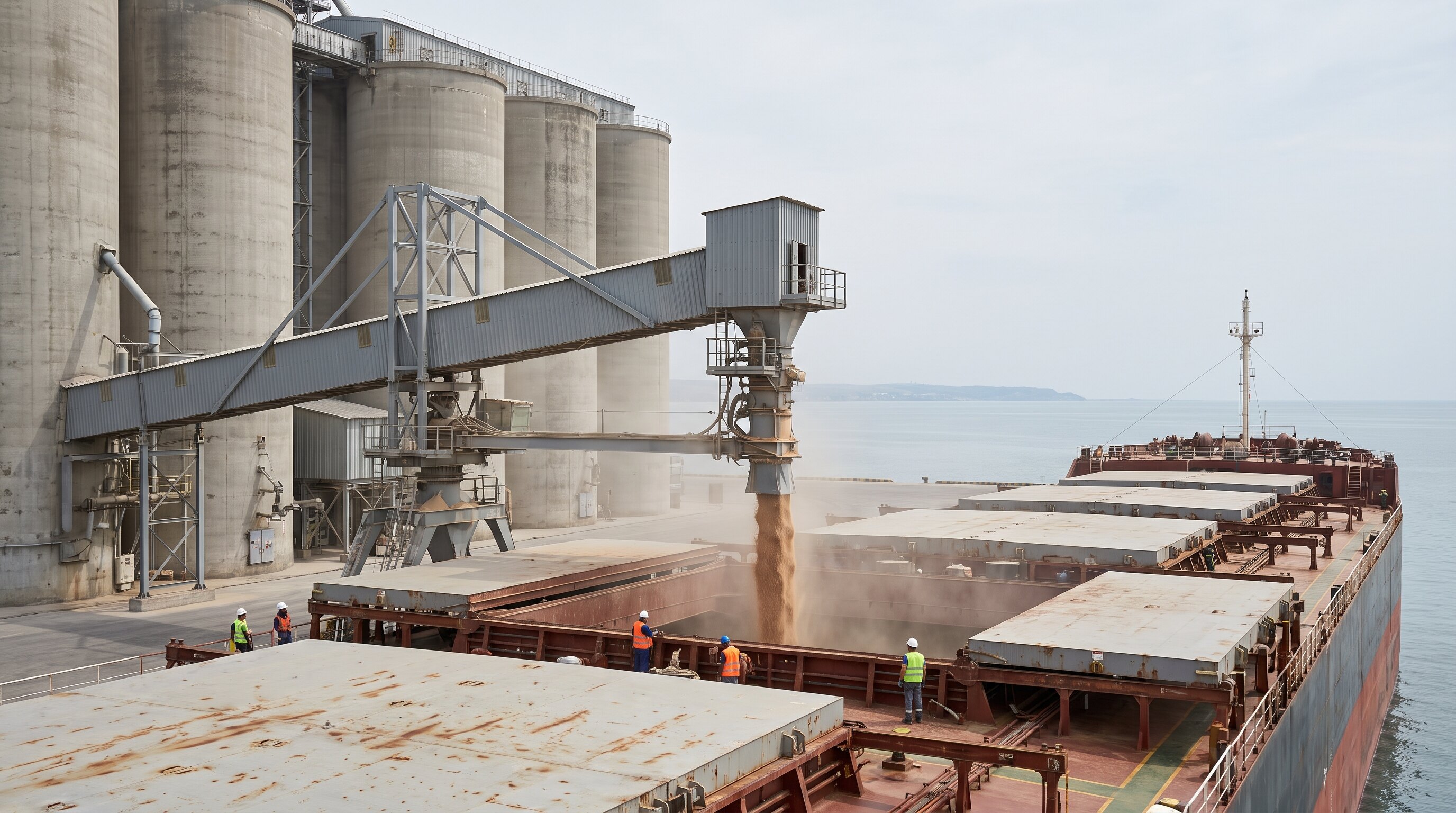
Black Sea origin and route assessment
A proposed Russian-origin or other Black Sea loading or transit structure is assessed against the buyer's specification, destination and shipment window, alongside any other evidenced options in the live file.
This page is an assessment guide, not evidence that a route or allocation is available. The authorised seller and relevant service providers must confirm current port schedules, firm allocations, facility access and producer availability for the specific transaction.
Locations commonly considered
Novorossiysk and Taman
These Russian ports are established loading areas for bulk agricultural and fertilizer cargoes. A proposed loading still requires review of seller identity and authority, terminal, berth, vessel, documents, inspection availability and current operating conditions.
Georgian and Romanian transit
If a live proposal uses Poti, Batumi or Constanta, the responsible counterparties and service providers must evidence the complete origin and transit structure. Its commercial benefit must be tested against added handling, customs, sanctions, terminal-policy and document-chain requirements. Transit through a country does not change the true origin of the goods.
Excluded or unavailable routes
Sarpah does not assume that every Black Sea port is usable. Crimea-related restrictions, listed ports, security events, terminal ownership and changing carrier or insurer policies can remove a route from consideration. Current primary sources and professional advice should be checked for the actual transaction.
What determines feasibility
- Confirmed commodity, grade and parcel size
- Evidence of seller authority and beneficial ownership
- Port, terminal and vessel status
- Freight and war-risk conditions
- Inspection and destination certification coverage
- Export, transit and destination permissions
- Bank and insurer acceptance of the complete route
Transit timing is estimated only after a live route and vessel basis are known. Historical sailing times may inform planning, while delivery commitments remain with the contracting seller and carrier.
Destination qualification
Load-port inspection and documentation must align with the actual destination's current product, import, inspection, customs and documentation requirements. The importer and declared end use are confirmed for the live transaction.
Assess a Black Sea option
Provide the commodity, specification, quantity, acceptable load areas, destination, shipment window and proposed payment structure.