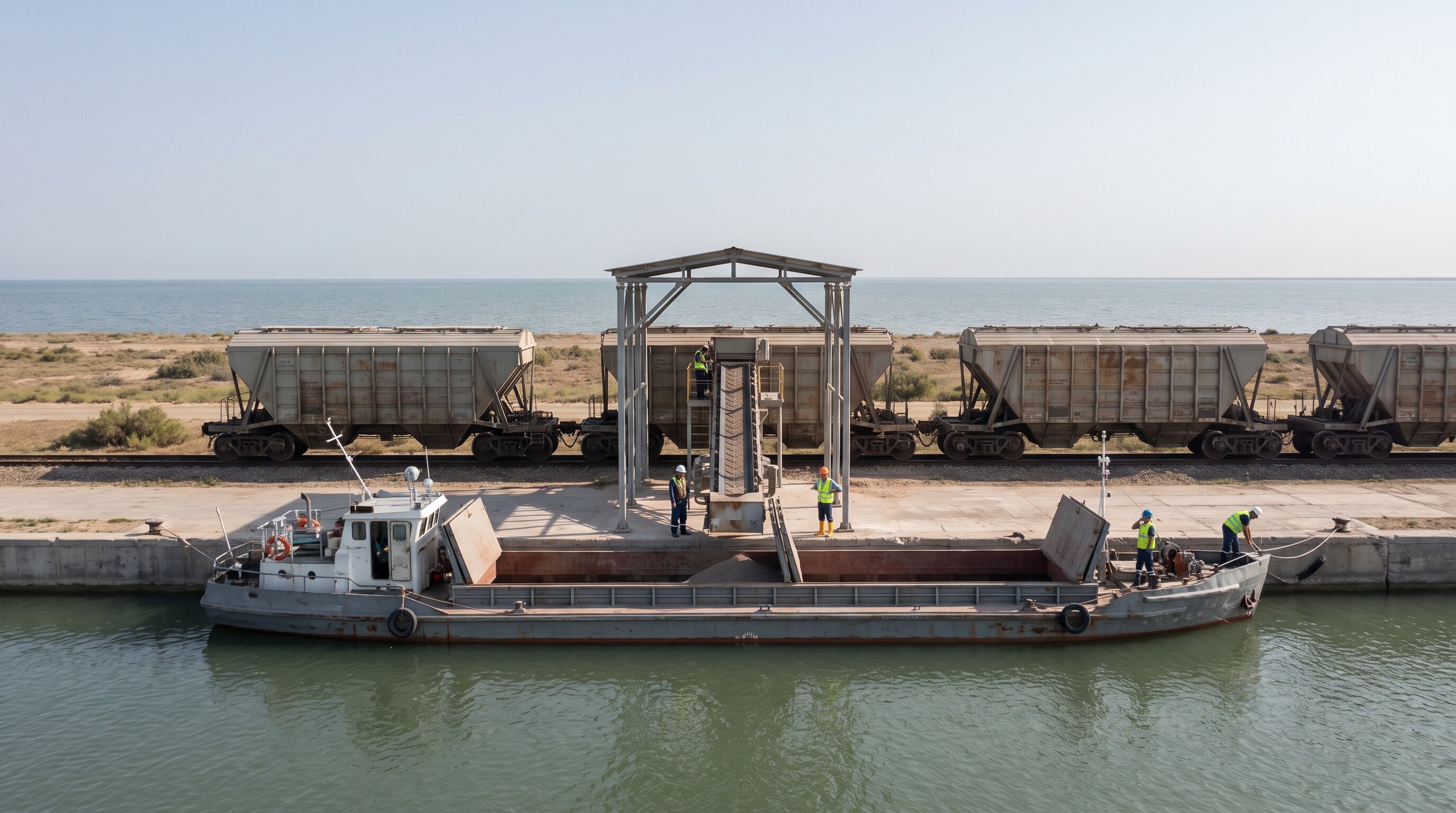
A route defined by its onward leg
A live requirement may propose a Caspian-linked origin for fertilizer, grain or a selected industrial product. Because the sea is landlocked, the responsible counterparties must evidence an inland, canal or trans-shipment plan before deep-sea delivery can be evaluated.
Caspian supply is assessed only when a specific proposal is evidenced. The live file must support the origin, current allocation, seller authority and producer relationship rather than relying on a location or commodity named here.
Structures a live proposal may require
Caspian to Black Sea
Cargo may move through the Volga and Don system or by other inland connections before deep-sea loading. Feasibility depends on season, draft, trans-shipment capacity, rail or river availability, handling loss, security and total timing.
Southbound to the Indian Ocean
Some concepts use rail or road to a Persian Gulf load point. Any route touching Iran requires specialist, current review of sanctions, banks, carriers, insurers, ports and services. It should not be assumed acceptable because the commodity itself is agricultural or otherwise generally permitted.
Direct inland alternatives
Depending on origin and destination, rail or multimodal delivery may be more appropriate than a sea route. The named delivery place and border responsibilities must be clear.
What we test
- Origin and evidence of seller authority
- Product specification and volume
- Inland transport and trans-shipment chain
- Seasonal constraints and handling points
- True origin and document continuity
- Destination inspection and certification needs
- Counterparty, bank, vessel, insurer and service-provider acceptance
- Landed economics against simpler origins
An additional transfer can create operational and documentary risk. Indicative transit estimates support planning; fixed performance commitments remain matters for the contracting principals and service providers.
Assess a Caspian option
Send the commodity, specification, quantity, origin, destination, shipment window, acceptable transit constraints and proposed payment structure.