For Upstream Originators
Sarpah introduces qualified East African institutional buyers to upstream originators across the Russia–CIS corridor under NCNDA / IMFPA. We work the seller side. Commission is paid to Sarpah by the originator under IMFPA on each cargo. The buyer and the originator contract directly under ICC rules; Sarpah is not a counterparty to the SPA and is not on the bank-instrument chain.
This page is for producer-affiliated trading houses, producer-side originators and mandated representatives of upstream principals considering a Sarpah East African mandate.
Why East Africa, Why Now
The Russia–CIS to East Africa corridor formalised through 2025–2026.
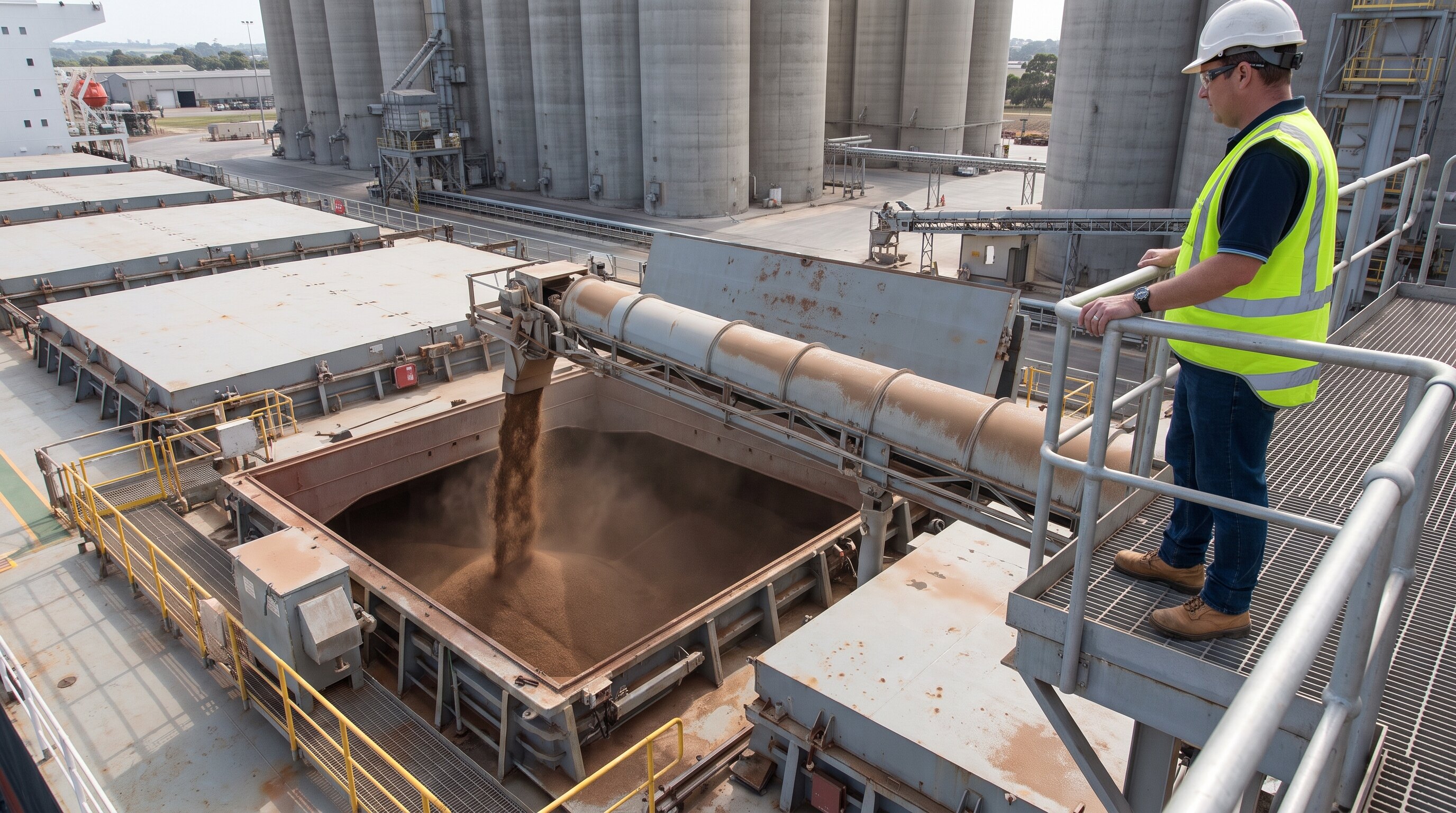
- Wheat: 423,000 MT into Kenya in Q1 2026 — an 8.3× increase on Q1 2025. Russia's share of Kenya's wheat imports is approximately 67% by value at the Q1 2026 run-rate, up from ~46% full-year 2024. The January 2026 Vysotsk inaugural shipment of 44,000 MT formalised a Baltic loading route that did not exist before late 2025.
- Fertilizer: the Kenya National Fertilizer Subsidy Programme moved 7.4 million 50-kg bags (~370,000 MT) in the 2025 long-rains cycle alone. The KTDA NPK 26:5:5+S+Zn+B procurement is the largest specification-driven fertilizer tender in East Africa — 99,875 MT awarded in the 2025 cycle. Beyond the subsidy and KTDA, FAFB-registered blenders (MEA, Yara Kenya, ETG, Elgon Kenya, Toyota Tsusho, Kel Chemicals, Mavuno) operate continuous compound flows.
- Edible oils, sugar, dry milk, petcoke, technical sulphur, sawn timber, plywood: continuous institutional flows beyond agriculture.
The Northern Corridor SCT extends from Mombasa into Uganda, Rwanda, Burundi, eastern DRC and South Sudan. The Central Corridor through Dar es Salaam reaches the same interior. Ethiopia connects via Djibouti and Berbera. The southern DRC copper belt reaches through Lubumbashi.
How an Introduction Works for the Seller Side
The protocol is identical for every cargo and is independent of the upstream relationship.
- Mandate. Sarpah signs NCNDA / IMFPA with the originator (or originator's mandated representative). The mandate defines the line, the territory, the term and the engagement terms (see Mandate Structure below).
- Buyer panel. Sarpah maintains a vetted East African institutional buyer panel — every counterparty screened against OFAC SDN, OFSI Consolidated, EU CFSP, UN Security Council Sanctions and the Kenya FRC POCAMLA register at onboarding, pre-shipment and pre-payment. See Buyer-Vetting Standard.
- Indicative pricing. Sarpah relays the originator's indicative offer to the qualified buyer; the buyer verifies against alternate origins.
- Direct SPA. Buyer and originator contract directly under ICC rules. Sarpah is not a counterparty.
- Bank instruments. The buyer's bank issues the documentary credit, standby letter of credit, or advance-payment guarantee directly to the originator's bank under UCP 600 / ISP98 / URDG 758. Sarpah does not appear on any instrument.
- Inspection. PVoC at the load port through the buyer's appointed KEBS partner under the 2026–2029 cycle (see /compliance/kebs-pvoc for the appointed-firm list).
- Sailing, discharge, settlement. Sarpah stays close through inspection, sailing, discharge at Mombasa, and reconciliation. Commission is settled to Sarpah by the originator under IMFPA on each cargo.
Mandate Structure
| Item | Standard position | Available on negotiation |
|---|---|---|
| Line | Defined per mandate (e.g. urea, NPK, wheat 11.5%, MOP non-designated) | Multi-line block mandate with separate IMFPA per line |
| Territory | East Africa — Kenya plus Uganda, Rwanda, Tanzania, Burundi, South Sudan, Ethiopia, eastern DRC and southern DRC copper belt | Kenya-only; full Sub-Saharan Africa with corridor segmentation |
| Term | 12-month rolling, renewable | 6-month evaluation; multi-year frame mandates against minimum-volume commitments |
| Exclusivity | Non-exclusive cargo-by-cargo by default | Corridor-exclusive or buyer-segment-exclusive on negotiated minimum-volume terms |
| Governing law | ICC rules; English law for the NCNDA / IMFPA framework | Per agreement |
| Dispute forum | London Court of International Arbitration (LCIA) or Nairobi Centre for International Arbitration (NCIA) | ICC Court of Arbitration (Paris) |
| Settlement currency | USD | EUR, AED or CNY where the correspondent chain so requires |
| Paymaster | Appointed at engagement under the IMFPA | Per agreement |
Commission Flow
Commission is paid to Sarpah under IMFPA per ICC framework. Paymaster, currency and reporting cadence are appointed at engagement under the signed mandate; specifics are discussed under NDA.
Buyer-Vetting Standard
Every East African buyer Sarpah introduces is:
- A FAFB-registered fertilizer importer (where the line is fertilizer); or NCPB-prequalified (NCPB tender supply); or KTDA tender bidder (where the line is the tea-NPK 26:5:5 block); or KNTC framework counterparty; or an NSE-listed miller, refiner or food processor; or a cement major or mining-cluster industrial buyer; or a UN agency procuring through UNGM (WFP East Africa); or a county-government procurement unit with verified KIAMIS subsidy role.
- A counterparty cleared at three points — onboarding, pre-shipment and pre-payment — against OFAC SDN, OFSI Consolidated, EU CFSP, UN Security Council Sanctions and the Kenya FRC POCAMLA register.
- Banking-instrument capable. The buyer holds a working relationship with a Kenyan tier-1 bank (KCB, Equity, Stanbic Kenya, NCBA, ABSA Kenya, Standard Chartered Kenya, Citibank Kenya, Co-operative Bank, Diamond Trust Bank) capable of MT700 / MT760 issuance with appropriate confirmation routing for the cargo.
- Documented to the originator's compliance team. Sarpah delivers a certified KYC pack at SPA stage covering: corporate registration certificate (CR12), board resolution naming signatories, beneficial-ownership certificate, regulatory credentials in scope (FAFB / KEBS / KEPHIS / KNTC / KTDA / NFSP), audited accounts (most recent two years), bank reference letter, and the buyer's internal sanctions-screening evidence.
What Sarpah Requires of Originators
Sarpah introduces buyers only to upstream originators who can stand up to East African tier-1 banking discipline.
- Corporate registration and tax ID in the originator's home jurisdiction; ISO 9001:2015 quality-management certification where the line is in scope; IFA membership where the line is in scope.
- Documented export track record into Sub-Saharan Africa, or evidence of equivalent compliance discipline against Turkey, Egypt, India, Bangladesh or other established corridor markets.
- Beneficial-ownership disclosure with cap-table evidence at SPA stage. The OFAC 50% blocking rule applies to USD flows; the UK and EU operate ownership-and-control tests that may reach further (as the EuroChem v Société Générale 2025 English High Court ruling demonstrates). Cap-table evidence is reviewed against all three regimes.
- Bank reference letter from a non-designated correspondent; designated-bank-routing-avoidance commitment (Sberbank, VTB, Gazprombank, Otkritie, Sovcombank, Tinkoff/T-Bank, Credit Bank of Moscow are full-block; Rosselkhozbank sits separately on OFAC EO 14024 Directive 3 NS-MBS sectoral list with case-by-case agricultural payment routing).
- Producer-entity status and Crimea / sanctions hygiene. Sarpah does not introduce buyers to JSC Belaruskali or JSC Belarusian Potash Company pending UK / EU resolution (the OFAC SDN designation was removed 26 March 2026 but UK OFSI and EU Reg 765/2006 designations remain). Crimean ports (Feodosia, Sevastopol, Kerch) are out of scope under OFAC EO 13685, EU 692/2014 and UK measures. Tuapse marine terminal was withdrawn following the EU 20th sanctions package addition of Tuapse to its listed-ports schedule on 23 April 2026.
Selectivity
Sarpah's introductions are scoped. We do not represent:
- Designated producers or producers whose UBO position cannot be evidenced below the OFAC 50% blocking threshold or cannot satisfy the UK / EU ownership-and-control test for the relevant currency leg.
- Producers loading from Crimean ports, the Tuapse marine terminal, or other sanctions-listed loadports.
- Producers without a documented quality-management standard (ISO 9001:2015 or equivalent) where the buyer's bank requires evidence of upstream production discipline.
- Producers unable to issue a bankable APG under URDG 758 for MT103-prepayment cargo structures, where that is the negotiated payment mechanism.
Reporting Cadence
- Per-cargo confirmation — issued post-settlement under NCNDA, evidencing the cargo against the IMFPA mandate.
- Monthly pipeline note — buyer-side enquiries in motion, indicative cargo windows, panel additions and removals.
- Quarterly market and tender-calendar report — NCPB / KNTC / KTDA / NFSP cycles, FAFB-registered blender procurement windows, EAC SCT corridor rate movements, KEBS PVoC cycle developments, sanctions-list deltas. The report is for originators on active mandate.
- Post-cargo debrief — operational issues at load, transit, discharge, surveillance, settlement; documentation-chain gaps observed; recommended adjustments for the next cargo on the mandate.
Onboarding Process
- Initial enquiry. Send a short introduction to [email protected] — corporate registration, line(s) for which a mandate is sought, ISO / IFA certifications in scope, beneficial-ownership headline, bank reference, indicative cargo profile and corridor.
- Acknowledgement. Sarpah acknowledges within two banking days.
- NCNDA execution. A standard NCNDA is exchanged at first call. Confidentiality runs from execution.
- Diligence. Producer-entity status, UBO disclosure, banking and sanctions-list screening, prior export-track-record review, ISO/IFA verification. Target window: 3–4 weeks.
- Mandate. IMFPA executed alongside the NCNDA. Mandate term, line, territory, exclusivity, engagement terms, paymaster appointment and reporting cadence locked.
- Buyer panel briefing. Sarpah convenes a structured briefing on the East African buyer panel relevant to the mandated line — buyer-by-buyer risk profile, banking capability, regulatory credential, current procurement window.
- Cargo one. First introduction. Sarpah is in the conversation through SPA, instrument, inspection, sailing, discharge and settlement.
Talk to us
For mandate enquiries: [email protected].
Useful first-call inputs: corporate registration, line(s) for which a mandate is sought, ISO 9001:2015 / IFA certifications, beneficial-ownership headline, designated-bank-routing-avoidance commitment, bank reference letter, indicative cargo profile (commodity, volume per shipment, target shipment window), corridor (Black Sea, Baltic, Caspian, Far East), and which East African buyer-segment intersects with your production capability.
Sarpah is a mandated agent under NCNDA / IMFPA; commission is paid by the seller side; buyer and seller contract directly under ICC rules.